I want you to feel clearer about what this treatment usually involves, what may affect your case, and how to protect the long-term health of your gums, bone, and smile.
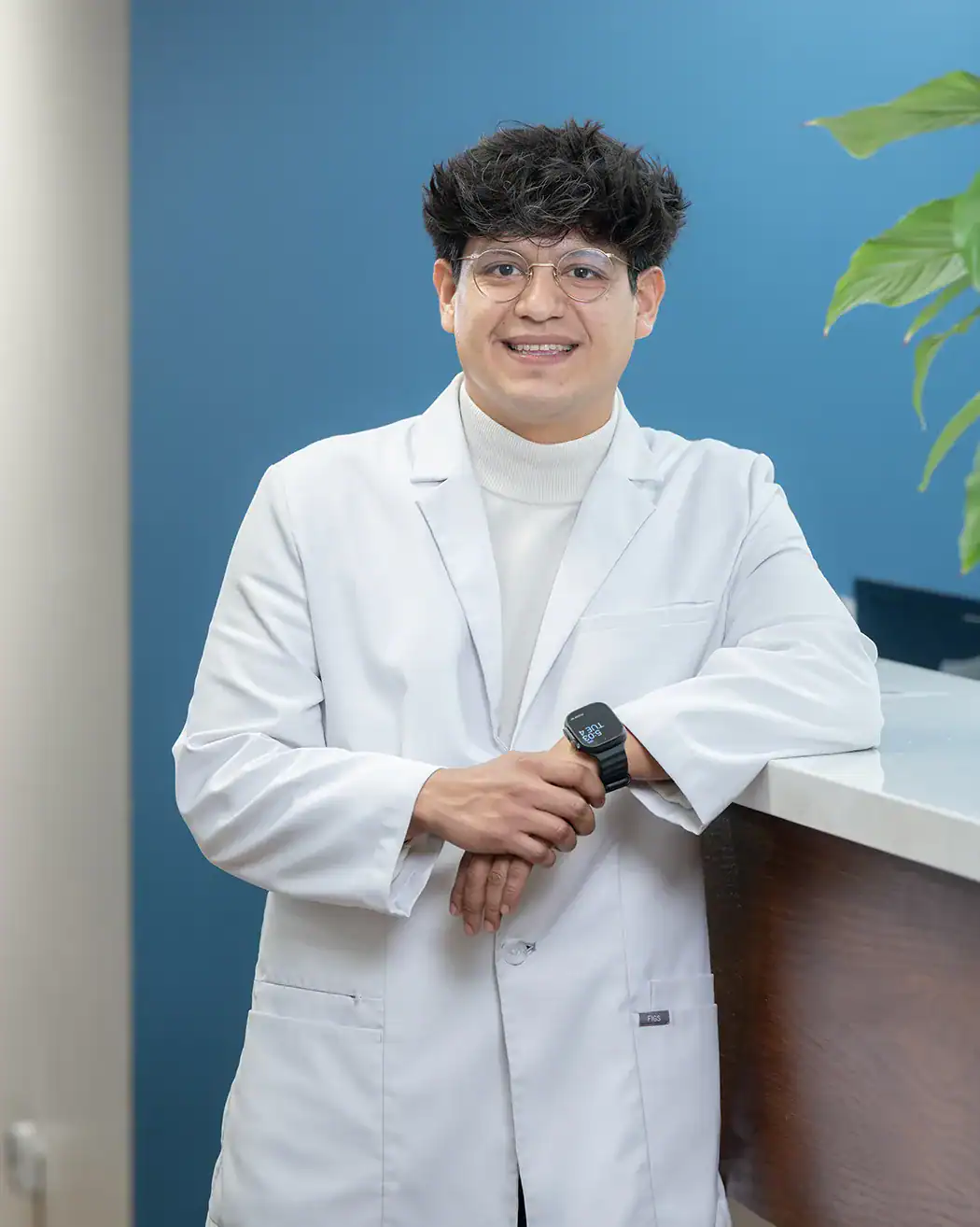
Dr. Angel Rodriguez, DDS, CAGS, MSDDr. Angel Rodriguez wrote this guide to help you understand how this topic may apply to you, what usually affects the treatment decision, and what the next step could look like if you want specialist guidance.
Gum graft recovery is manageable for most patients and follows a predictable pattern. The first 24 hours require the most care; by the end of the first week most patients are eating normally and experiencing only mild residual soreness. The second and third weeks are about letting the graft integrate. Knowing what to expect at each stage helps patients manage their recovery without surprises.
Day 1: the day of the procedure
Local anesthesia wears off 2-4 hours after the procedure. Some tenderness and pressure in the treated area is expected, and if a palate graft was used, at the harvest site as well.
A surgical dressing or periodontal pack may be placed at the graft site. Do not touch or disturb it.
Bleeding: small amounts of oozing are normal for the first few hours. If bleeding is heavier, apply gentle pressure with gauze for 20-30 minutes.
Diet: soft, cool foods only. Avoid anything hot, spicy, crunchy, or acidic. Smoothies, yogurt, scrambled eggs, and mashed potatoes are appropriate. Do not use straws.
Do not brush at the treated area. Rinse gently with a prescribed or saline rinse if directed.
Plan to rest. Avoid physical exertion for the remainder of the day.
Days 2-3: the peak of discomfort
Most patients experience the highest level of soreness on days 2-3. Over-the-counter analgesics (ibuprofen, acetaminophen) manage this well for the majority of patients. If prescribed pain medication was provided, follow those instructions.
Swelling is normal and typically peaks around day 3. Some patients develop mild bruising. This is a normal inflammatory response, not a complication.
The palate harvest site (if applicable) tends to produce more soreness than the graft site itself during this window. Stinging or a raw sensation when eating or drinking is common.
Continue soft, cool foods. Stay hydrated. Avoid tobacco and alcohol, as both impair healing.
Sleep with head slightly elevated to reduce swelling.
The first step is understanding whether grafting is appropriate for your recession.
A specialist evaluation maps the recession, assesses tissue volume, and determines whether grafting or another approach fits the clinical picture. Patients choose PIHP for the depth of the assessment.
Days 4-7: discomfort subsides
Soreness typically improves significantly by day 4-5 for most patients.
Swelling should be reducing. The graft site may look white or have a slightly unusual appearance. This is normal tissue healing, not failure.
The palate may still be tender, particularly when eating foods with varied textures.
By the end of the first week, most patients can eat a reasonably normal diet, avoiding hard, crunchy, or very hot items. Soft foods remain the safest choice.
Do not brush at the surgical site. Continue any prescribed rinse or antibiotic if provided.
A follow-up appointment is typically scheduled in this window to check healing.
Week 2: the graft establishes
During the second week, the graft is developing its blood supply from the surrounding tissue. This process is happening below the surface and is not visible.
Externally, the graft site may look different from the surrounding tissue: slightly raised, a different color, possibly with a visible suture line. This is all within normal variation.
Most patients return to regular activities and find the recovery manageable by the start of week two.
Avoid vigorous exercise or activities that significantly raise blood pressure, as this can disrupt early graft integration.
Oral hygiene: gentle brushing may be reintroduced at non-surgical sites. Follow the specific instructions provided, as these are individualized to the case.
Weeks 3-4: the transition to normal care
By weeks 3-4, the graft is typically well-integrated. Soreness is usually minimal to absent.
Normal diet can usually be resumed.
The graft site will continue to mature and change in appearance for several months. Final tissue color and contour take time to fully settle.
Brushing can typically be resumed at the graft site with the technique instructed by the periodontist.
A follow-up evaluation confirms that the graft is integrating well and that the root coverage result is developing as expected.
Full healing and final results
Gum tissue fully matures over 3-6 months. The final root coverage result, how much of the exposed root is now covered, becomes clear during this window.
For the first few months, the graft site may look slightly different from adjacent gums. This normalizes as the tissue matures and the blood supply fully establishes.
Most patients find the long-term result is stable and durable. Grafting adds tissue thickness and, where root coverage is achieved, removes the sensitivity and aesthetic concern that prompted treatment.
The maintenance plan after grafting includes regular periodontal monitoring. The periodontist will want to confirm the result is holding and that recession has not re-established.
What affects how your recovery goes
Smoking: significantly impairs healing. Patients who smoke have higher rates of graft failure and slower tissue healing. Smoking cessation for at least 2 weeks before and after the procedure is the clinical recommendation.
Diabetes: patients with uncontrolled diabetes may heal more slowly. Well-controlled diabetics typically heal comparably to non-diabetic patients.
Following post-op instructions: the single biggest factor within the patient's control. Patients who follow the diet restrictions, avoid disturbing the graft site, and attend follow-up appointments have materially better outcomes than those who do not.
Tissue biotype: thinner tissue biotypes are more delicate and require more careful post-op management. The periodontist tailors instructions accordingly.
General health: patients in good health with no complicating factors typically have the smoothest recoveries.
Related guides
If you are still comparing options, these guides cover the next questions patients usually ask before requesting more info.
Return to the landing page if you want to request more info or get more specific guidance for your situation.